




.svg?la=en&revision=cee9767f-8e72-4d76-a07a-14ba25688269&hash=ADF64722447408F8CA70B4436F59CB64)
Planar Near-Field Systems
Planar Near-Field (PNF) systems are ideally suited for characterizing medium and high gain antennas accurately and efficiently. A key benefit of the PNF geometry is that the DUT remains stationary during test. This is especially important for modern antennas whose complexity makes dynamic motion during test challenging. This is the industry standard solution for calibrating Active Electronically Scanned Arrays (AESA) using the park & probe technique.
We recommend limiting PNF testing to antennas whose gain is greater than or equal to ~15 dBi, with data collection limited to ~±80º from DUT boresight. For increased versatility, Spherical (SNF) and Cylindrical (CNF) add-on options are available for some PNF types. These combination systems give you the efficiency of a PNF solution combined with the flexibility to characterize a wider range of antenna types.
NSI-MI offers a wide range of PNF system types:

Vertical PNF
The most common PNF type, suitable for most antennas whose apertures can be installed vertically for test.

Horizontal PNF
Excellent choice for high-throughput production testing, gravitationally sensitive antennas, or facilities with ceiling height restrictions.
Vertical Planar Near-Field Systems
Exceptional planarity with active structure correction
Courtesy of STFC RAL Space
NSI-MI’s Vertical Planar Near-Field (PNF-XYV) systems are ideally suited for testing the forward hemisphere of medium and high gain antennas with gain greater than around 15 dBi. PNF-XYV systems are the perfect solution to accurately and efficiently characterize reflectors, phased arrays, large aperture, or satellite antennas, with angular coverage up to ≤±80° from boresight. We offer scan plane sizes ranging from 0.9 m x 0.9 m (3 ft x 3 ft) to 32.9 m x 15.2 m (108 ft x 50 ft), with custom sizes available to meet your requirements. Each system comes equipped with high-capacity probe polarization and Z-translation stages, supporting frequencies ranging from 0.5 GHz to 110 GHz and above, depending on the chosen model.
If your antenna can be easily installed in a vertical orientation, the PNF-XYV solution may be the best system to meet your needs. This is the most common PNF implementation due to its measurement efficiency, compact size, and AESA calibration capabilities. Options for fixed or adjustable DUT mounts are available, along with add-on packages to add SNF and/or CNF measurement capabilities to further increase the flexibility of the PNF-XYV system. Learn more about our line of PNF-XYV systems below.
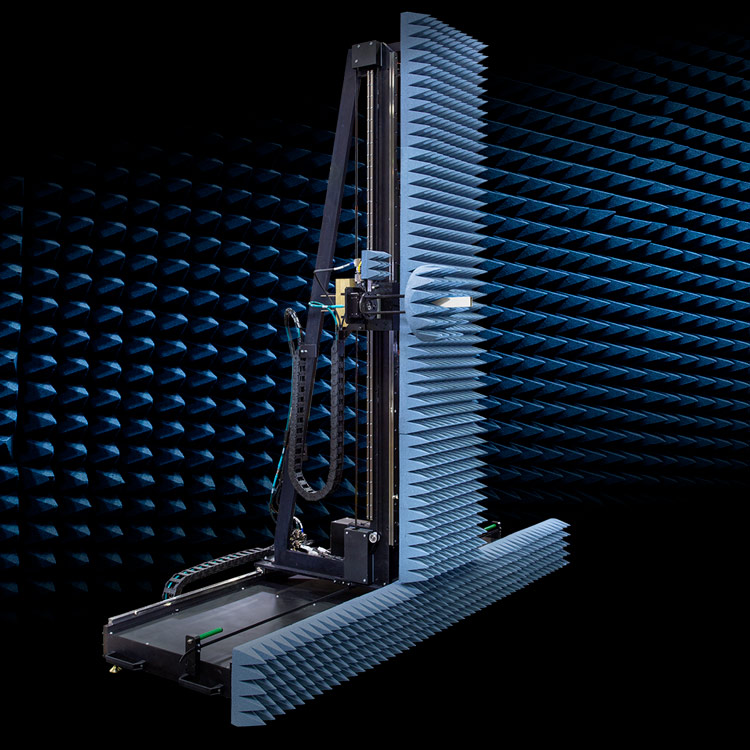
Pre-Configured Near-Field Vertical Planar Systems
If tight deadlines or budgets are influencing your RF testing solution choice, our cost-effective, pre-engineered systems offer reliable performance for most applications. These turnkey solutions are easy to assemble in either anechoic chambers or open facilities, depending on your testing needs
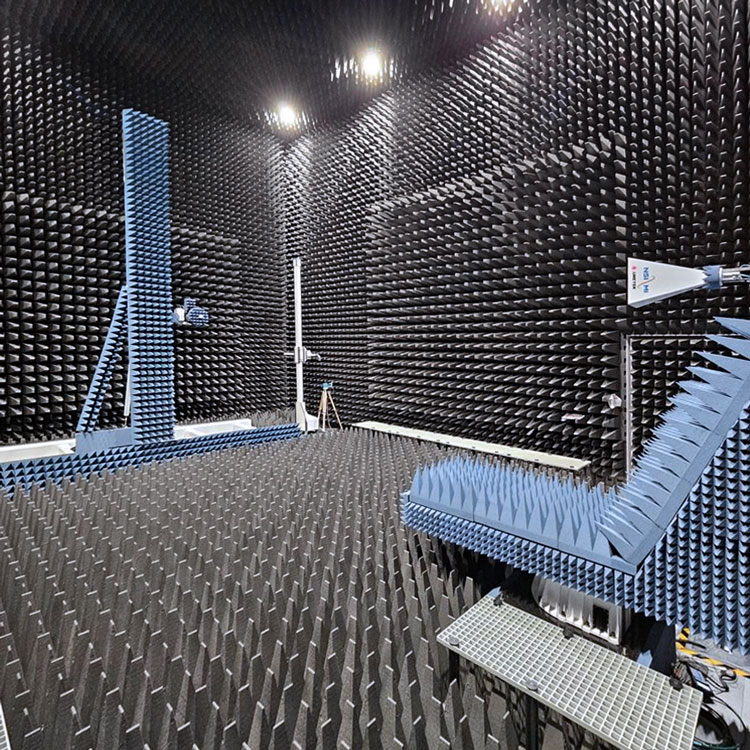
Medium Vertical Planar Systems
NSI-MI’s Vertical Planar Near-Field (PNF-XYV) systems are ideal for testing medium to high gain antennas (≥15 dBi), including reflectors, phased arrays, and satellite antennas, with angular coverage up to ±80° from boresight. These systems support scan planes from 1.8 m to 6.1 m square and include high-capacity polarization and Z-translation stages for probes down to 0.75 GHz.
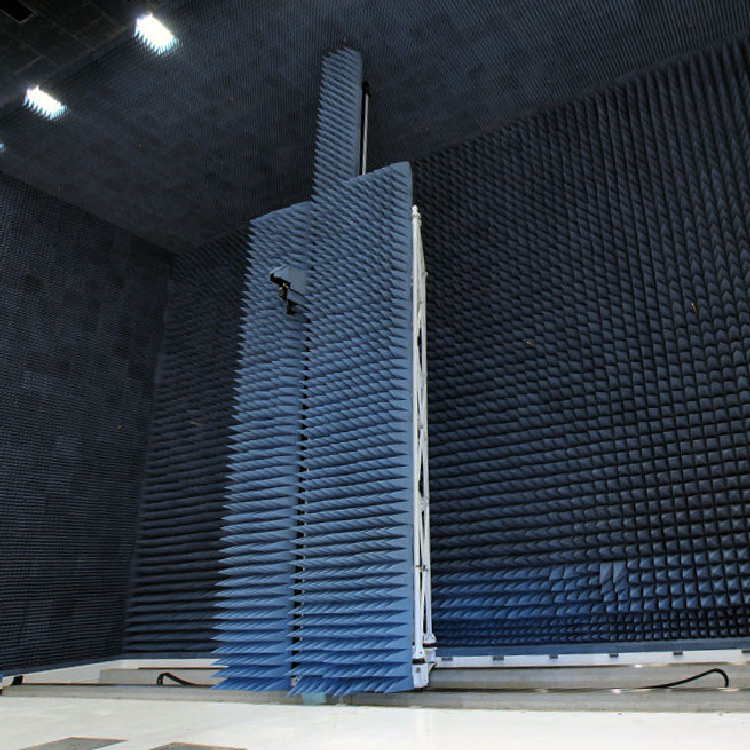
Large Vertical Planar Systems
NSI-MI’s Vertical Planar Near-Field (PNF-XYV) systems are optimized for forward hemisphere testing of medium to high gain antennas (≥15 dBi), including reflectors, phased arrays, and satellite antennas, with up to ±80° angular coverage. Large systems offer scan planes from 9.1 m to 32.9 m wide, with custom sizes available. Each system supports probes down to 0.5 GHz and includes high-capacity polarization and Z-translation stages.
Horizontal Planar Near-Field Systems
The ideal solution for gravitationally sensitive antennas.
NSI-MI’s Horizontal Planar Near-Field (PNF-XYH) systems are ideally suited for testing the forward hemisphere of medium and high gain antennas in high-throughput production environments, for gravitationally sensitive antennas, or in facilities with height restrictions. We offer scan plane sizes ranging from 1.8 m x 1.8 m (6 ft x 6 ft) to 20.1 m x 15.5 m (66 ft x 51 ft), with custom sizes available to meet your requirements. Each system comes equipped with high-capacity probe polarization and Z-translation stages, supporting frequencies ranging from 0.5 GHz to 110 GHz and above, depending on the chosen model.
PNF-XYH systems are the preferred solution for satellite antenna characterization. The ability to deploy an antenna horizontally, with antennas and other gravitationally sensitive devices facing upward allows for better simulation of operating conditions. The addition of our Active Antenna Test Suite (SYS-AATS) unlocks system-level characterization of parameters like the Equivalent Isotropic Radiated Power (EIRP), Gain-over-Noise-Temperature (G/T), Saturating Flux Density (SFD), and more. Learn more about our line of PNF-XYH systems below.
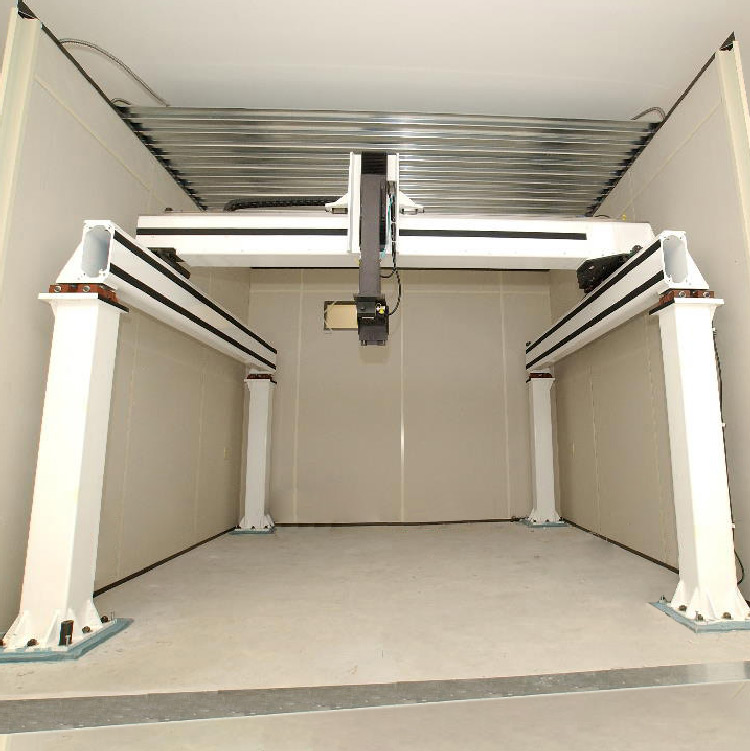
Small Horizontal Planar Systems
Our horizontal scanners feature a next generation, precision closed-loop servo drive system, ensuring precise and accurate scanning results.
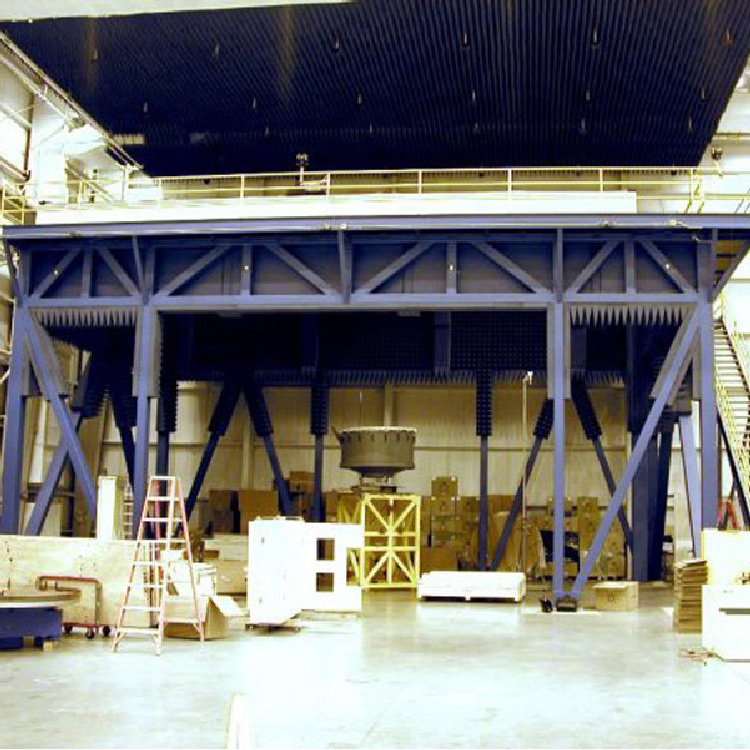
Medium Horizontal Planar Systems
Ideal systems for measuring large aperture antennas with medium to high gain (>15 dBi) making them suitable for testing larger arrays or reflector antennas that require a zenith orientation for testing.
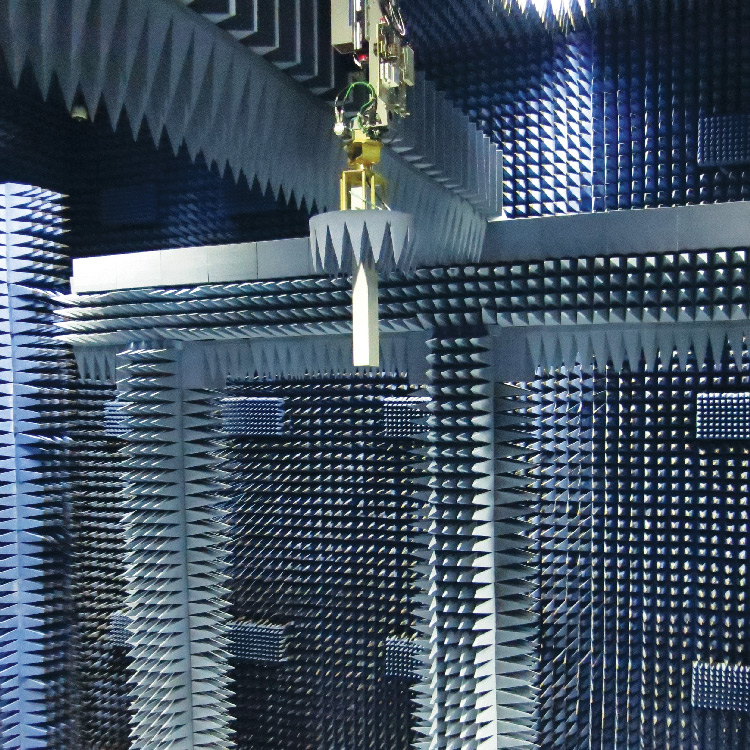
Large Horizontal Planar Systems
Ideal for measuring large aperture antennas with medium to high gain (>15 dBi) making them suitable for testing larger arrays or reflector antennas that require a zenith orientation for testing.