




.svg?la=en&revision=cee9767f-8e72-4d76-a07a-14ba25688269&hash=ADF64722447408F8CA70B4436F59CB64)
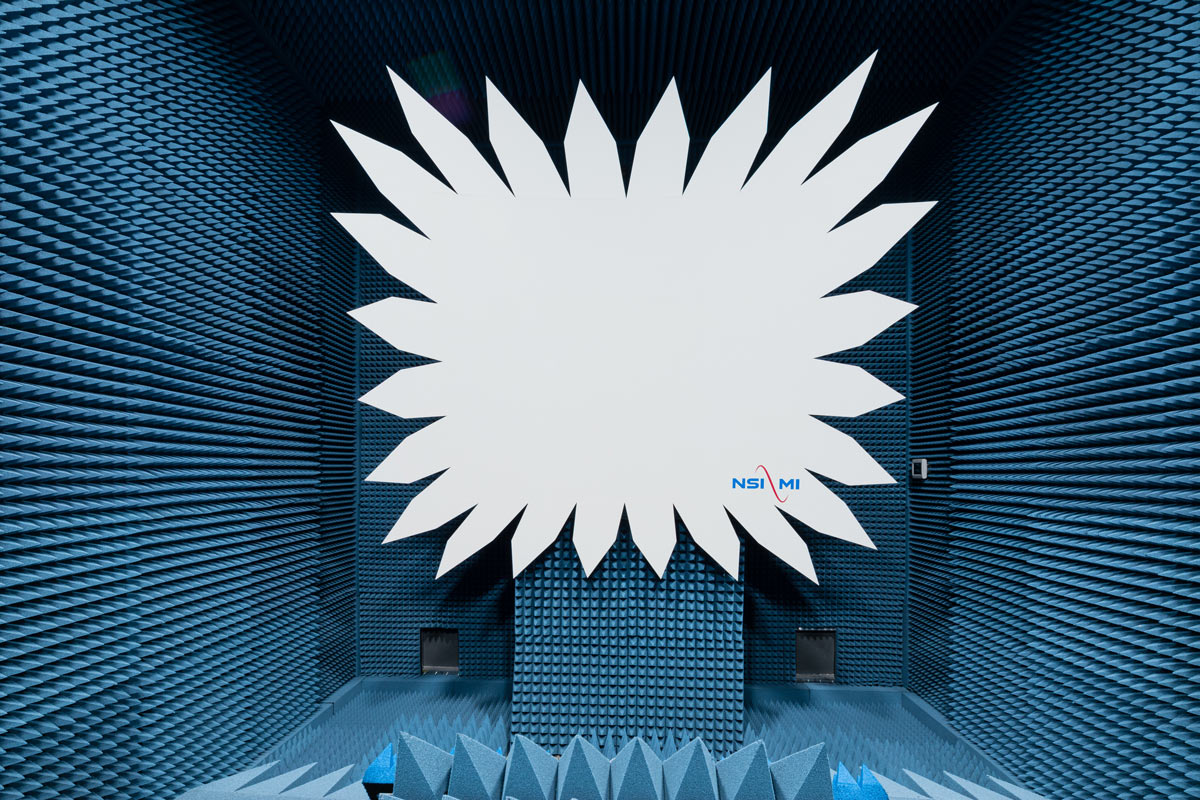
Compact Range Reflectors
Model: CRR-CSC, CRR-ESC, CRR-CRC
Features
- Quiet Zones from 0.3 m (1 ft) – 10.7 m (35.0 ft)
- Achievable frequency range of 0.35 – 110.0 GHz
- Modular design is easily configured
- Superior thermal properties
- Serrated and rolled edge treatments
NSI-MI’s Legacy and Innovation
NSI-MI Technologies has long held a leadership position in the industry, having pioneered compact range technology since developing the first commercial system in 1972. With over 500 units delivered globally, NSI-MI continues to set the benchmark for performance and innovation. The company advances every aspect of reflector system development—from design and fabrication to surface characterization, transportation, installation, and electromagnetic evaluation. Ongoing efforts focus on enhancing electromagnetic performance prediction tools, developing advanced materials, refining fabrication techniques, and improving surface contour machining processes. These innovations ensure that NSI-MI remains at the forefront of compact range technology, delivering precision-engineered solutions for demanding test environments.


Benefits of Compact Range Testing
NSI-MI’s compact range reflector-based systems deliver all the benefits of traditional far-field testing—without the limitations of outdoor environments. Designed for precision and convenience, these systems allow users to conduct electromagnetic measurements in smaller, secure, climate-controlled facilities. For example, testing a 1-meter diameter antenna at 10 GHz in a conventional far-field setup would require a separation distance of nearly 67 meters. With NSI-MI’s compact range technology, this can be achieved in a chamber under 7 meters long, dramatically saving space while maintaining measurement accuracy.

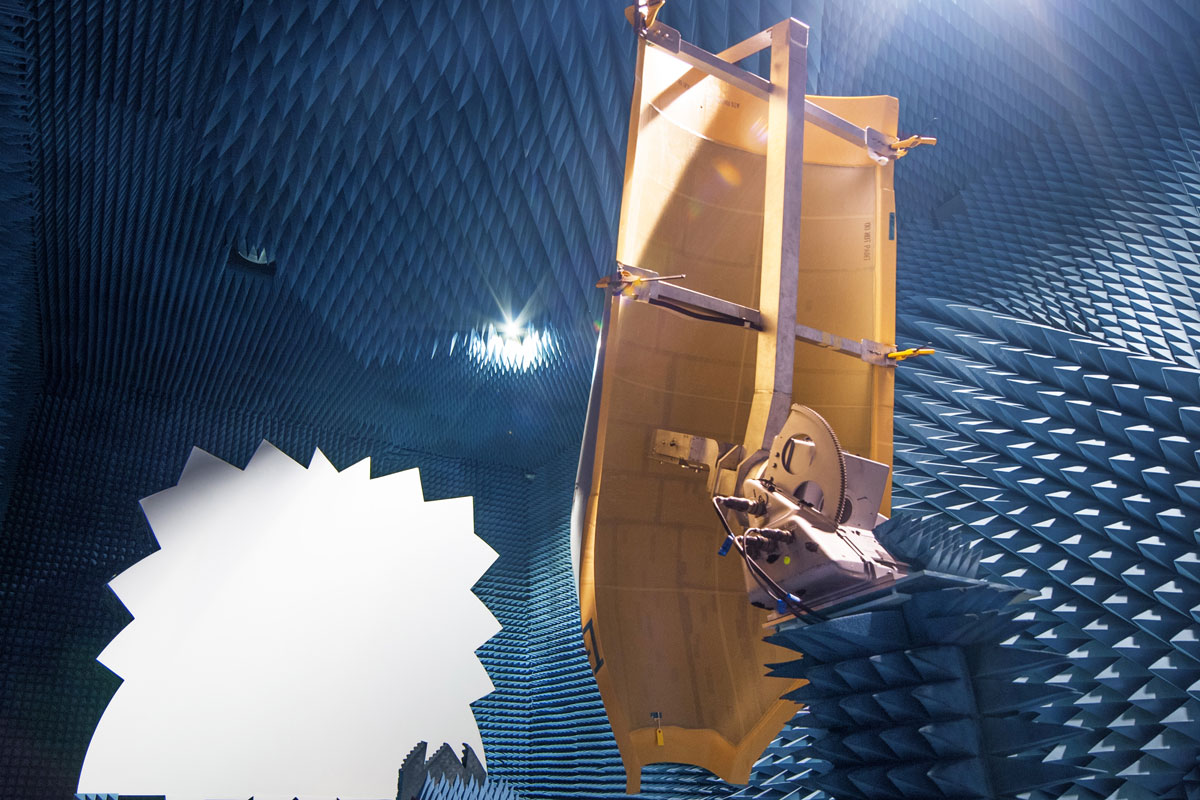
From Small to Massive
NSI-MI’s standard compact range reflectors are available in a wide range of sizes—from 30 cm diameter cylindrical quiet zones to extremely large elliptical quiet zones over 10 meters wide by 7 meters high. Designed to operate across a broad frequency spectrum, these systems offer unmatched flexibility for testing antennas, radomes, and RCS targets of all sizes.

Advanced Edge Treatments & Custom Reflector Engineering
All of the standard reflectors have either serrated edge or rolled edge treatments for control of edge diffractions. Custom models are available upon request. Typical customizations include specially sized reflectors or edge treatments to address specific electromagnetic requirements. Custom models for different quiet zone sizes and for higher and/or lower frequencies can also be designed and manufactured to meet specific customer requirements.
The length of the edge treatment is carefully scaled to the wavelength at the lowest operating frequency. For low-frequency applications, rolled edge designs are preferred, as serrations would require impractically long structures. These precision-engineered edges ensure clean wavefronts and high-fidelity measurements—making NSI-MI reflectors the trusted choice for demanding test environments.
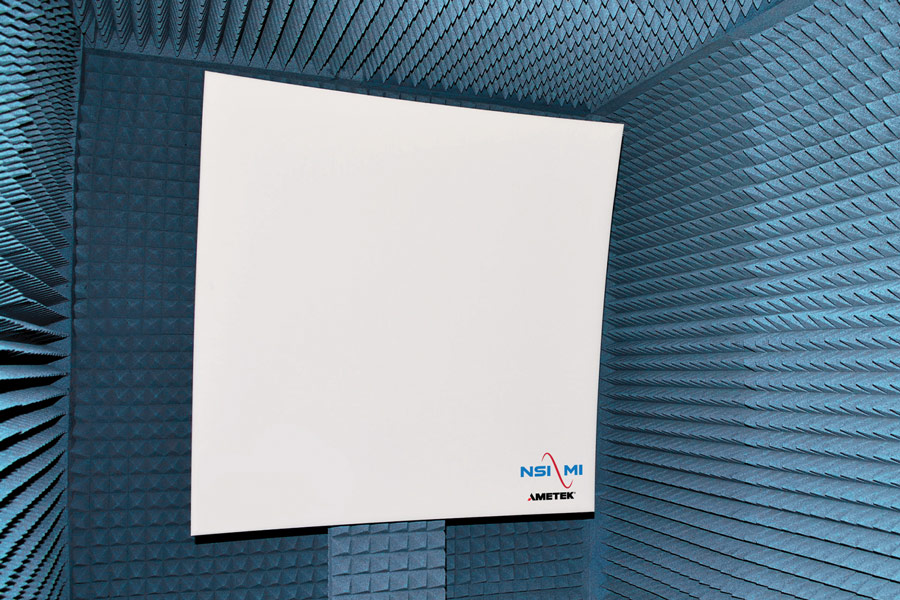
Rolled Edge Reflectors
Pros
Compact Design and Cost Effective for Small Reflectors
The reflector body is approximately the same size as the quiet zone, resulting in a smaller overall footprint.
Blended Geometry Advantage
The central parabolic region collimates the spherical wavefront into a plane wave, while the rolled edges gradually redirect energy toward absorbers (walls, ceiling, floor).
Weaker Diffracted Fields
The smooth transition from parabolic to elliptical geometry in the rolled edges helps divert energy away from the quiet zone, reducing unwanted diffraction.
Ideal for Low Frequencies
Their design makes them particularly effective in applications requiring large quiet zones and operation at lower frequencies.
Cons
Higher Manufacturing Cost for Large Quiet Zones
The complex surface geometry of rolled edges makes them more expensive to fabricate.
Demanding Absorber Treatment
Because coherent energy is redirected toward the chamber boundaries, high-performance absorbers are needed to prevent reflections.
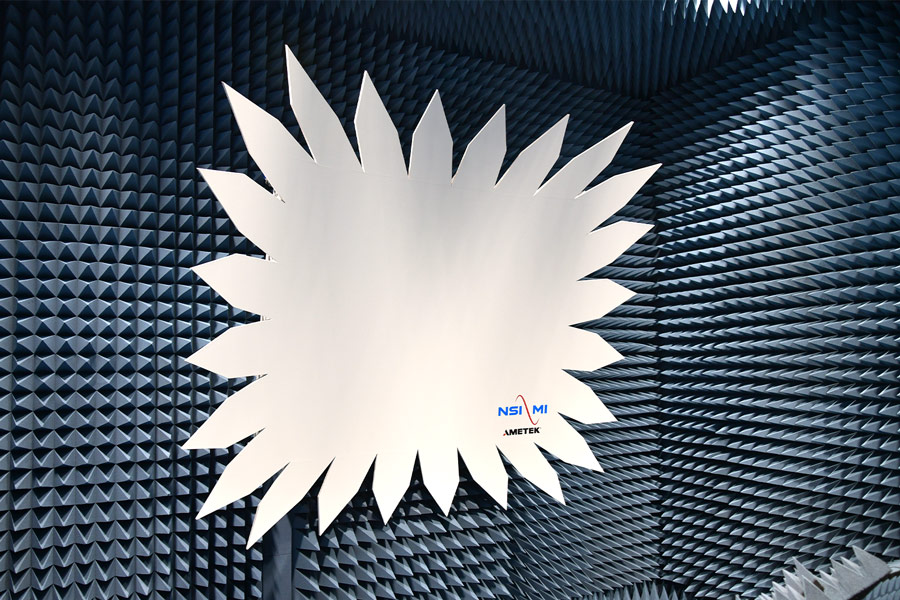
Serrated Edge Reflectors
Pros
Cost-Effective for Medium and Large Reflectors
Simpler geometry makes serrated reflectors less expensive to manufacture.
Absorber Tolerance
More forgiving of imperfections or limitations in chamber absorber treatment.
No Direct Feed Reflection
The virtual vertex design ensures no physical surface at the vertex, eliminating the normal surface that points back to the feed.
Best for Medium to Large Quiet Zones
Their design is well-suited for compact setups and higher frequency applications.
Cons
Larger Reflector Size
To achieve the desired quiet zone, the reflector body must be significantly larger, increasing space and material requirements.
Stronger Diffracted Fields
Serrations break up the edge fields into discrete packets, which can still cause elevated diffraction levels within the quiet zone.
Rigid Structure & Precision Surface Accuracy
Reflector Manufacturing and Characterization
The standard compact range reflector (CRR) is constructed using advanced materials and manufacturing techniques to ensure a rigid structure with a precisely defined surface. Material selection is carefully guided by thermal expansion properties to maintain surface accuracy and electrical conductivity, both critical for optimal electromagnetic performance.
The reflector’s main support consists of modular steel framework integrated with truss structure to enhance stiffness. The design allows scalable fabrication, enabling the production of reflectors in various sizes using consistent processes. Machinable material with compatible thermal properties is applied to the surface, which is then precision-machined by NSI-MI to meet strict quality and accuracy standards.
Post-fabrication, surface accuracy is verified using advanced metrology tools such as Laser Tracker or Laser Radar Systems. These instruments capture detailed spatial geometry data, which is analyzed against the master surface using specialized software. Measurements are taken in the installed orientation, and typical surface accuracy achieved is approximately 15 microns across the panel area—essential for high-fidelity performance at elevated frequencies.