




.svg?la=en&revision=cee9767f-8e72-4d76-a07a-14ba25688269&hash=ADF64722447408F8CA70B4436F59CB64)
SNF: The Gold Standard in Antenna Testing
SNF systems are widely considered to be amongst the most accurate solutions available to measure full sphere radiation patterns. The SNF method was first pioneered by the Technical University of Denmark, who are still considered world experts to this day. NSI-MI delivered our first commercial SNF test system in 1980 and have been pushing the state-of-the-art ever since.
While SNF solutions are generally less efficient than the PNF counterpart, the ability to characterize all or most of the radiation pattern in a controlled environment is unparalleled. The SNF geometry has been used to measure all types of antennas, including many complex antennas for defense and space applications.
NSI-MI’s line of SNF test systems includes several options designed to solve the most demanding of measurement challenges:

Roll over Azimuth
This versatile solution, the most common SNF implementation, offers wide frequency coverage and is capable of measuring a full sphere for antennas up to 3 meters in diameter. An optional mast can be used for cellular and PCS-band base station antenna testing.

Overhead Theta Axis
Spherical scanning is accomplished by rotating the antenna-under-test (AUT) on an azimuth positioning system while elevation scans are accomplished using a near-field probe mounted to an arch or rotating gantry.

Stationary SNF
An ideal solution for measuring radiation characteristics of unmoving antennas that do not require full spherical coverage and cannot be tested using the planar near-field technique.
Roll over Azimuth Scanner Systems
The Roll over Azimuth solution is the most common system type for the characterization of full sphere radiation patterns in the near-field. The DUT mounts to a roll-over-azimuth positioner assembly, enabling rotation around two orthogonal axes to measure antennas with up to 3 m (10 ft) diameter from 200 MHz to 110 GHz and beyond, depending on the chosen model. This system can serve as a dual-purpose SNF and direct illumination far-field range and is often installed as an add-on to a Vertical Planar Near-field (PNF-XYV) system.
This system type offers the unique benefit of being the only SNF geometry capable of measuring the entire radiation pattern, often within facilities with height restrictions. This is balanced by the fact that the SNF-RAZ requires the antenna to be mounted horizontally, meaning that it will experience a changing gravity vector during measurements. Learn more about our line of Roll over Azimuth systems below.
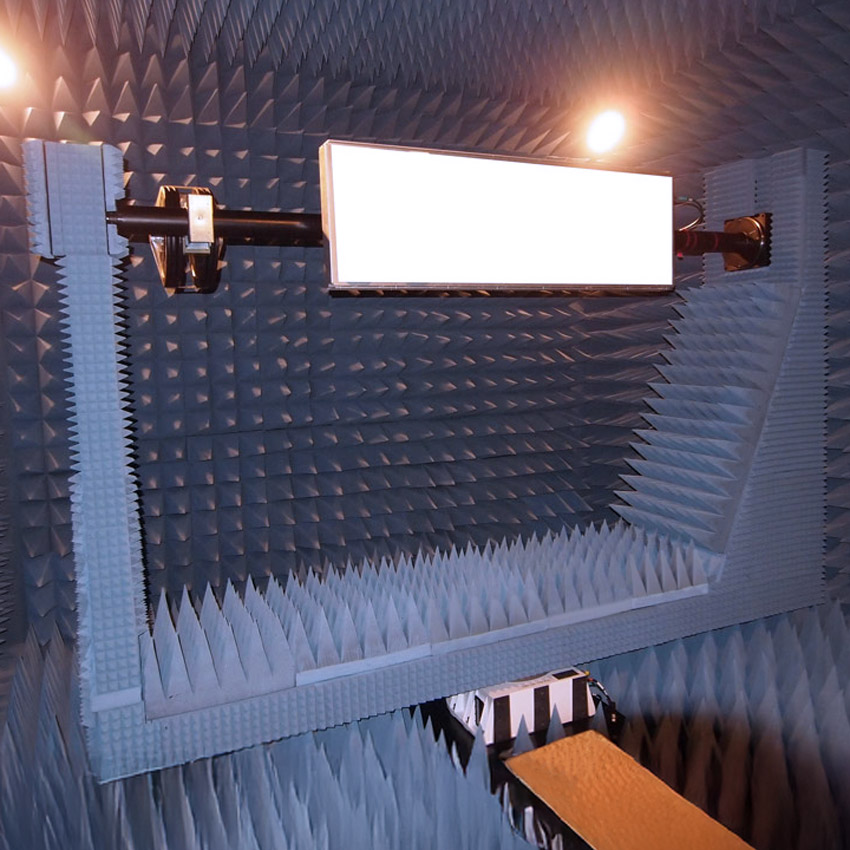
Roll over Azimuth
Roll over azimuth scanner systems are ideal systems for measuring medium and low gain antennas up to 3 m (118 in.) in diameter and are ideally suited to perform cellular and PCS band base-station antenna testing.
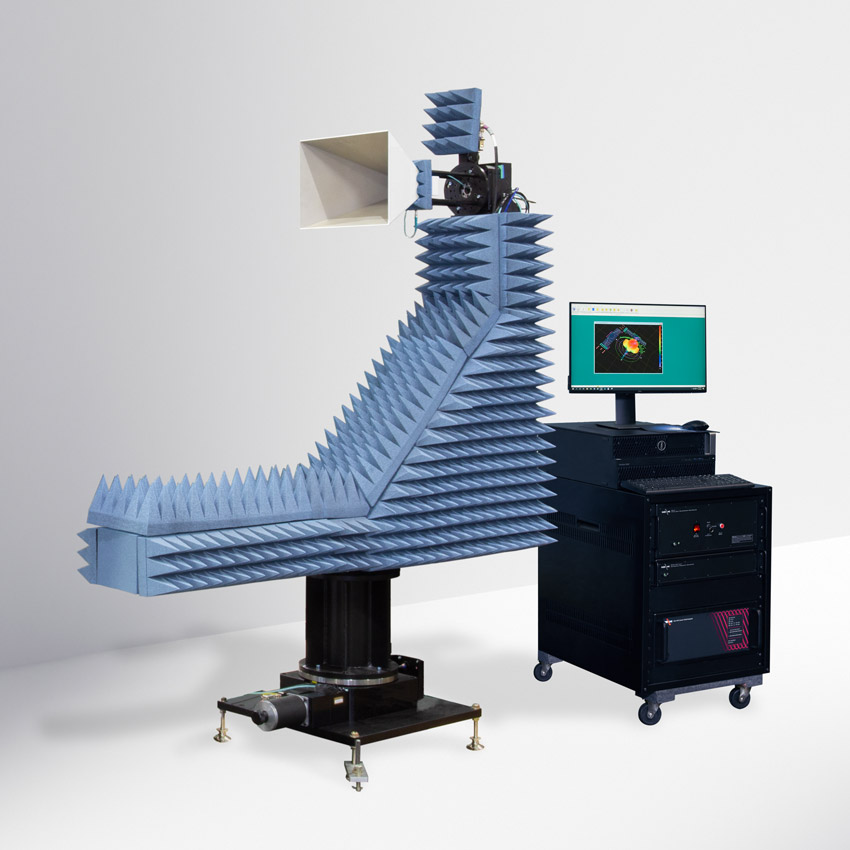
SNF-RAZ-0.7
The SNF-RAZ-0.7 is a pre-configured three axes spherical near-field measurement system ideal for measuring low to medium gain antennas from 0.37 to 110 GHz. The system is constructed of high strength aluminum and can support AUT payloads of up to 18 kg (40 lb). The independent probe stand and AUT positioner are easy to assemble, align and can be quickly dismantled for transport or storage.
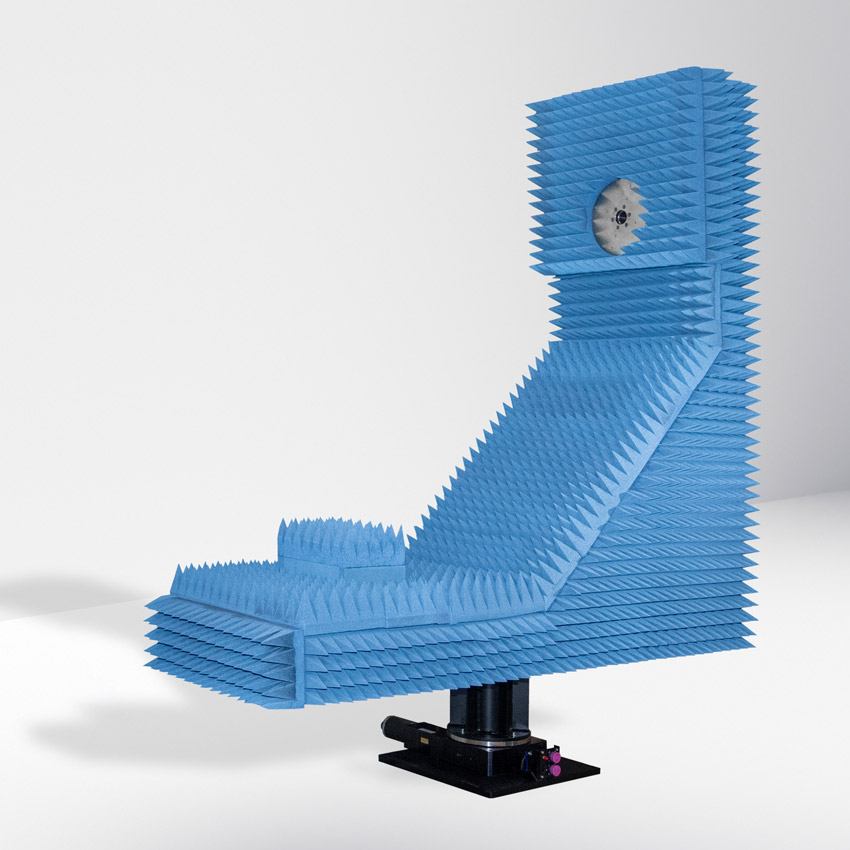
SNF-RAZ-1.3
Model SNF-RAZ-1.3 is a pre-configured three axes spherical near-field measurement system ideal for measuring low to medium gain antennas from 0.37 to 110 GHz. The system is constructed of high strength aluminum and can support AUT payloads of up to 75 kg (165 lb). The independent probe stand and AUT positioner are easy to assemble, align and can be quickly dismantled for transport or storage.
Overhead Theta Axis Systems
The Overhead Theta Axis system is ideal for measuring medium and low gain vertically oriented antennas up to 7.3 m (24 ft) in diameter. The DUT mounts to a lower azimuth stage, while a probe moves along a fixed arch or moving gantry to generate a partial sphere around the DUT. This system type reduces the gravitational sensitivities observed with the more common Roll over Azimuth geometry. This implementation also has the added benefit of greatly simplifying the challenges associated with cable management since cabling to the DUT only needs to pass through a single rotary axis.
The maximum achievable angular coverage depends on the size of the DUT, the available room height, and the lowest test frequency. For most applications, NSI-MI recommends the Swing Arm over Azimuth (gantry-style) system, but the more precise Arch over Azimuth solution is available for the most mechanically demanding requirements. Learn more about our line of Overhead Theta Axis systems below.
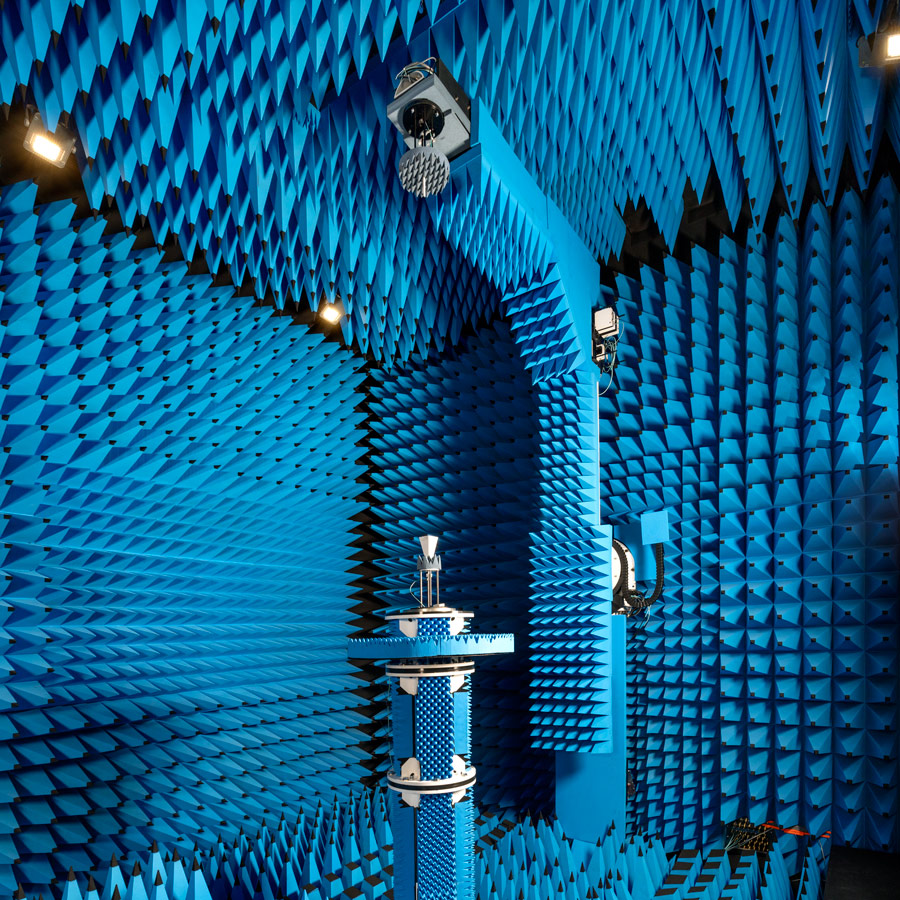
Swing Arm over Azimuth
Swing arm-over-azimuth systems are ideal system for measuring medium and low gain antennas up to 7.3 m (24 ft) in diameter.
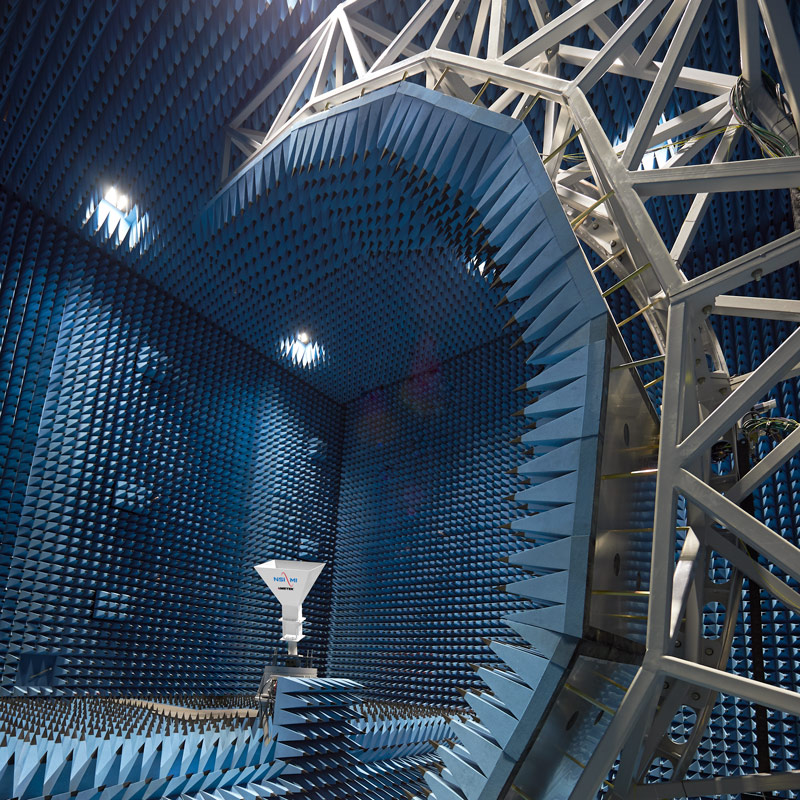
Arch over Azimuth
Spherical scanning is accomplished by rotating the Antenna Under Test (AUT) on an azimuth positioning system while elevation scans are accomplished using a near-field probe mounted on the arch carriage.
Stationary Spherical Near-Field Solutions
NSI-MI offers several Stationary Spherical Near-Field Solutions to address some special cases where a DUT cannot be moved during measurement. These include many millimeter wave and sub-millimeter wave on-chip antennas excited using probing stations and active phased arrays with too many control, RF and coolant lines to manage on a conventional SNF system. These systems support measurements from 1 GHz up to 330 GHz and beyond, depending on the chosen model.
Various models are available, each optimized for a particular class of antennas and application. The selection of the ideal Stationary SNF system will depend on the size of your DUT, the operating frequency, and desired mounting orientation. Learn more about our Stationary Spherical Near-Field Solutions below.
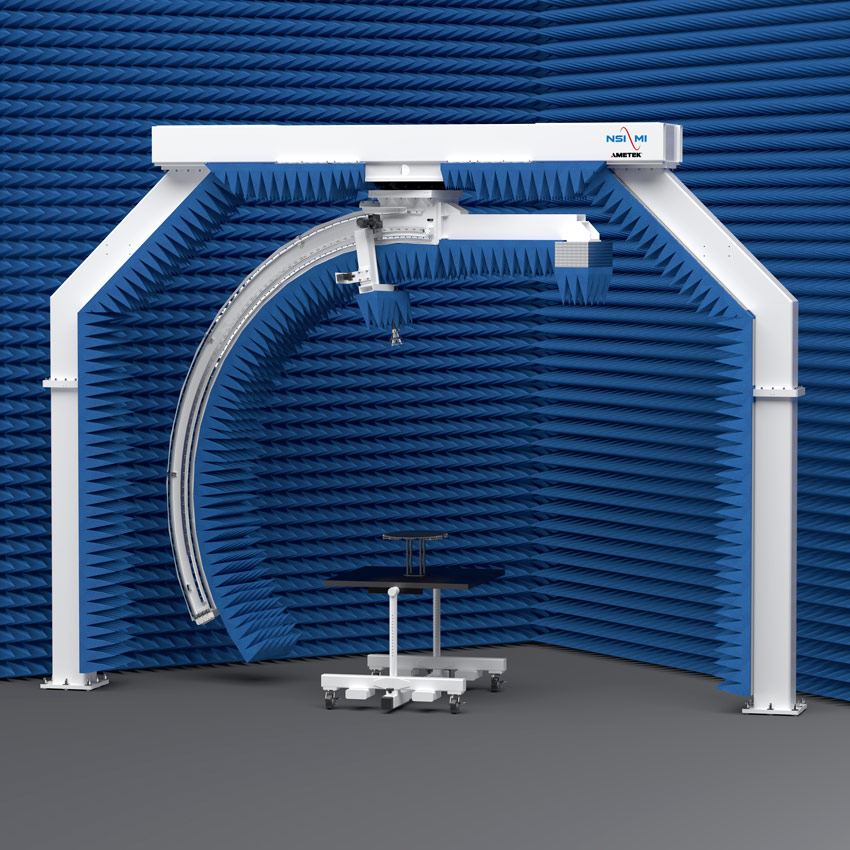
Spherical Near-Field Vertical Arch
The spherical near-field vertical arch measurement system is an ideal solution for measuring radiation characteristics of non-moving antennas.
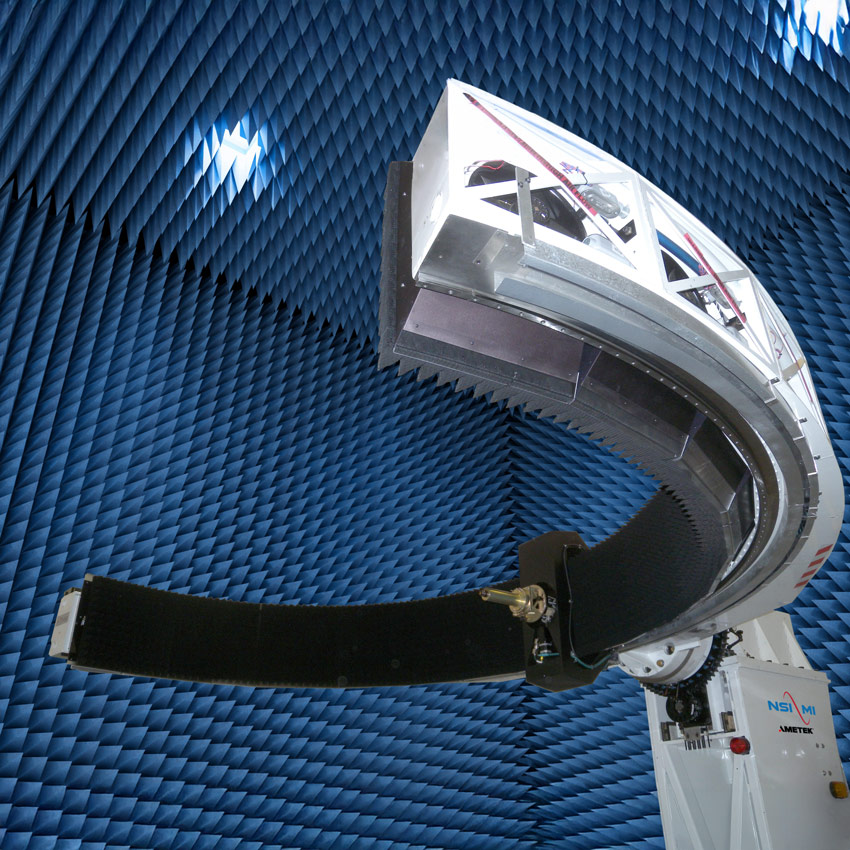
Near-Field Arch Roll
The spherical near-field vertical arch measurement system is an ideal solution for measuring radiation characteristics of non-moving antennas.
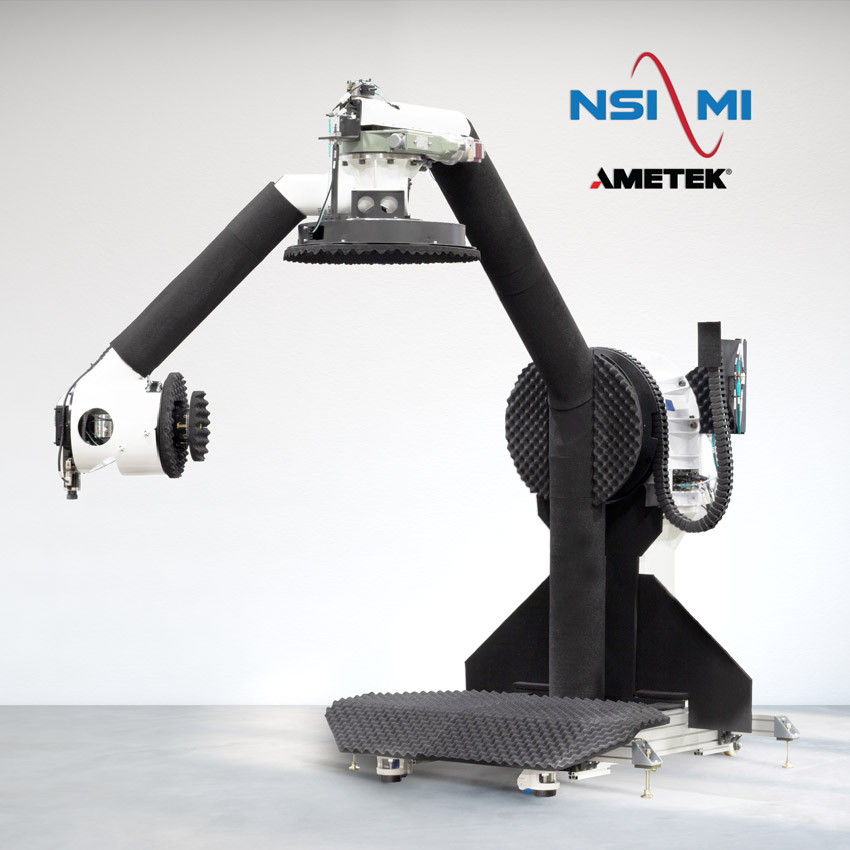
Spherical Near-Field mmWave Measurement System
Spherical Near-field mmWave Measurement Systemis ideal to measure stationary mm-Wave on chip antennas.